

Demystifying security compliance in Europe: what leaders need to know
Security compliance in Europe is no longer optional it directly impacts customer trust, legal exposure, and business continuity, as Anzhela Pozdniakova, Chief of Product at Xpand Portal, explores in this article. Leaders are increasingly expected to understand not just the rules, but who is responsible for meeting them.
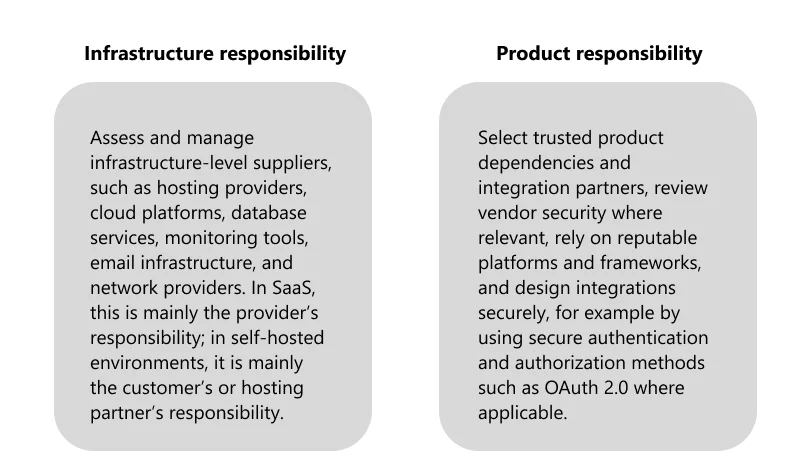
The key principle: security is a shared responsibility. Some controls belong to the infrastructure or hosting provider, some to the product vendor, some to the customer organization. The exact split depends on the deployment model – in SaaS, more operational responsibility usually sits with the provider; in self-hosted environments, more remains with the customer or hosting partner.
For leaders, the goal is not to become security experts. The goal is to know which questions to ask, who owns each area, and whether responsibilities are clearly understood. Below are the key compliance areas in plain terms, organized by what infrastructure and product teams are each expected to cover.
1. Preventing unauthorized access and exposure
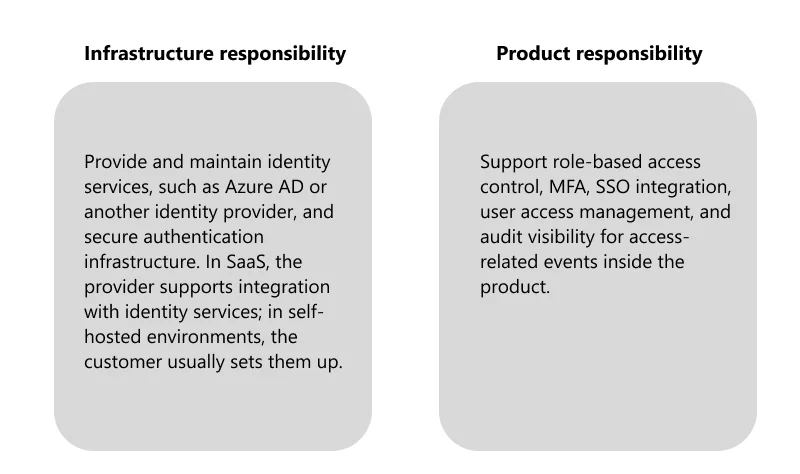
Access control, MFA, and SSO
Why it matters:
Ensures only authorized users can access the system, reducing the risk of unauthorized access.
Example:
Using SSO with a corporate identity provider helps ensure that only users with valid company credentials can log in. MFA adds another layer of protection if credentials are compromised and makes sure the generic credentials are not used and shared across multiple users.
Role-based access control
Why it matters:
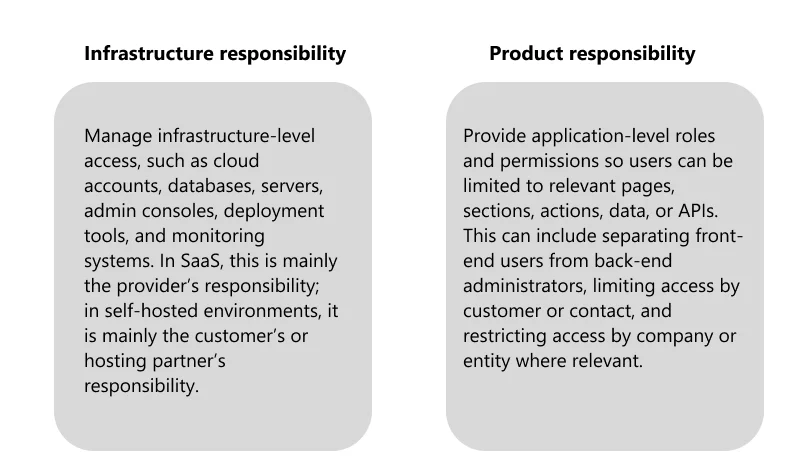
Ensures users only see and change the information they are allowed to work with.
Example:
A customer service user may be allowed to view customer requests but not change system settings. An administrator may have access to configuration areas. This reduces the risk of accidental changes, internal misuse, or unauthorized access to sensitive data.
Network and information system security
Why it matters:
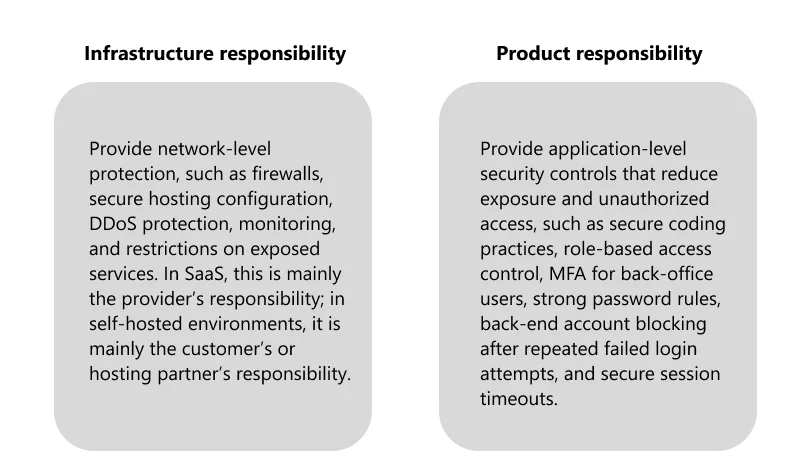
Protects the technical environment from unauthorized access, automated attacks, and unnecessary exposure of systems or data.
Example:
Infrastructure-level controls help protect the environment before traffic reaches the portal. Product-level controls help ensure that only authorized users can access relevant portal areas.
Data encryption at rest and in transit
Why it matters:
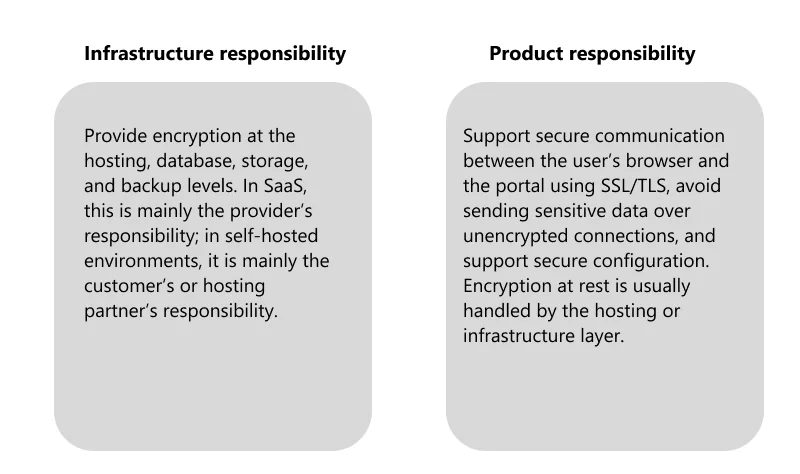
Protects data so it cannot be easily read if it is intercepted, copied, or accessed without permission.
Example:
If a customer submits personal or business data through the portal, encryption in transit protects it while it moves between the browser and the server. Encryption at rest protects stored data, such as databases, files, and backups.
2. Detecting issues and responding effectively
Incident detection, reporting, and breach response
Why it matters:
Organizations need to detect suspicious activity early, respond quickly, and have a clear plan if data or systems are affected.
Example:
If someone repeatedly tries to log in using stolen credentials, the system should detect unusual activity, block or limit access, and help the team investigate what happened.
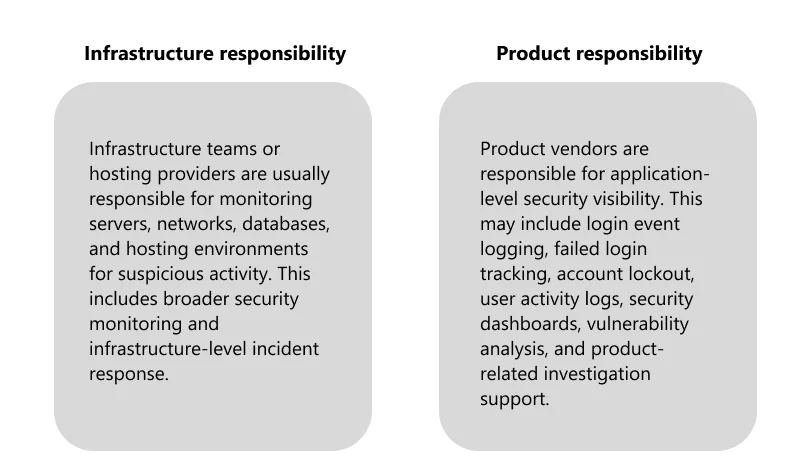
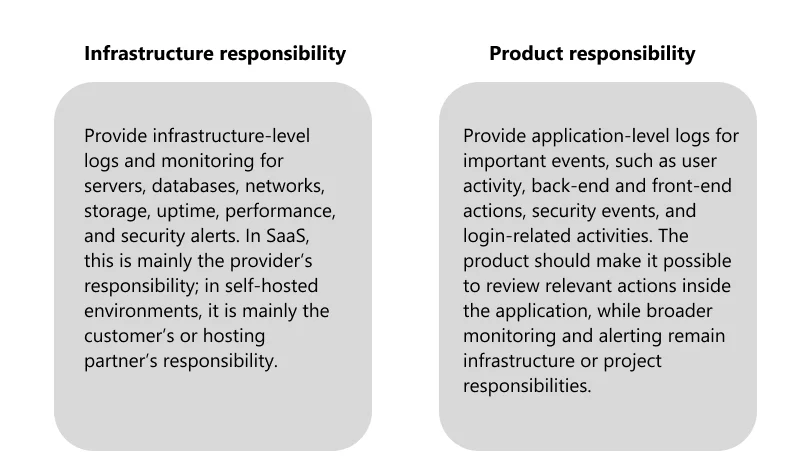
Auditing, logging, and monitoring
Why it matters:
Helps show what happened in the system, who did what, and whether unusual activity needs attention.
Example:
If a user changes important data, logs can help show who made the change and when. If there are repeated failed login attempts, monitoring can help identify suspicious activity before it becomes a bigger problem.
3. Keeping the environment secure and resilient
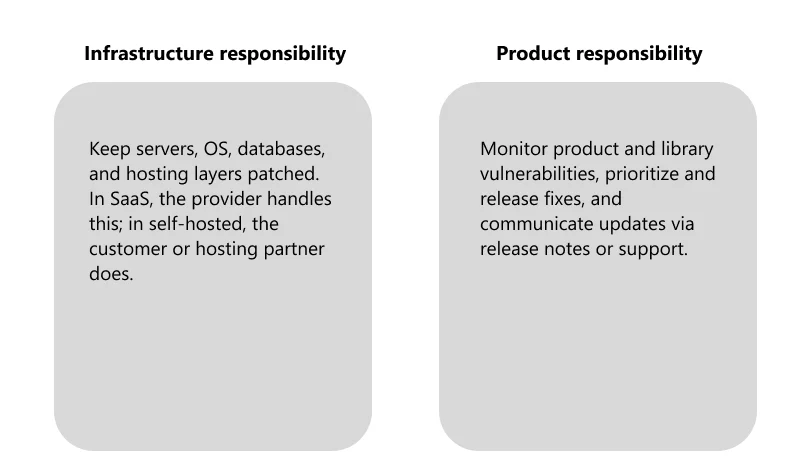
Vulnerability management and Patching
Why it matters:
Helps close known security weaknesses before attackers can use them.
Example:
If a server or product component has a vulnerability, it must be patched/upgraded.
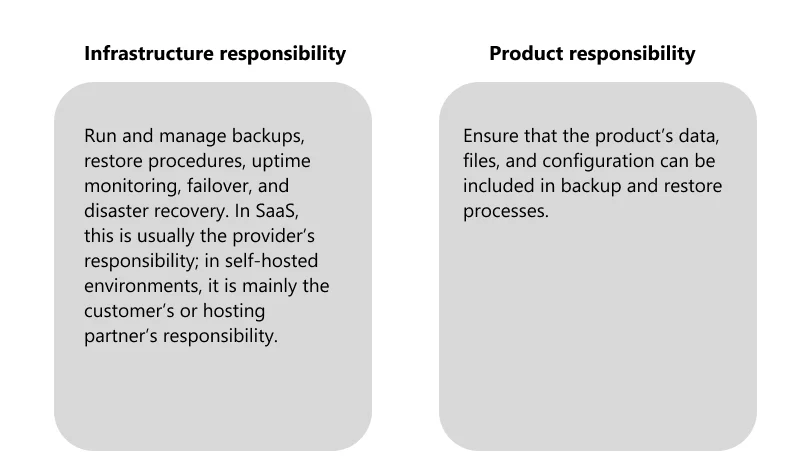
Business continuity and backup
Why it matters:
Helps the business recover if the system goes down, data is lost, or something is deleted by mistake.
Example:
If data is accidentally deleted or a server fails, backups and restore procedures help recover the system instead of losing critical information.
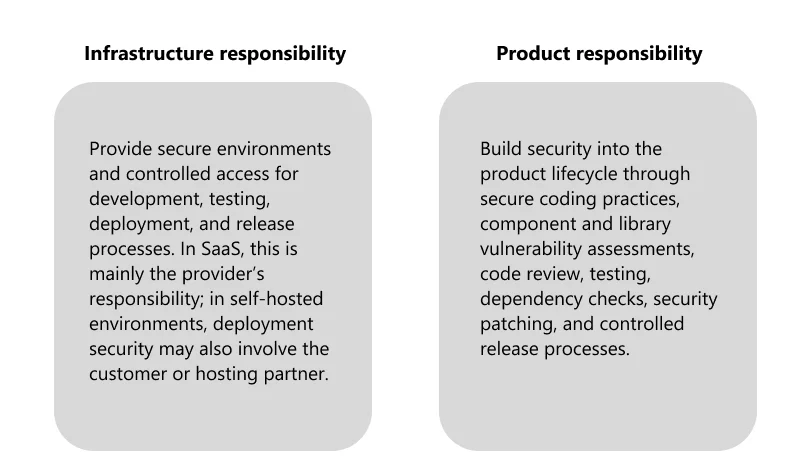
Secure development practices
Why it matters:
Ensures security is considered while the product is designed, built, tested, and released, not only after a problem appears.
Example:
Before releasing a new feature, the product team should check whether it could expose sensitive data, create unsafe access, or introduce a vulnerability through a third-party component.
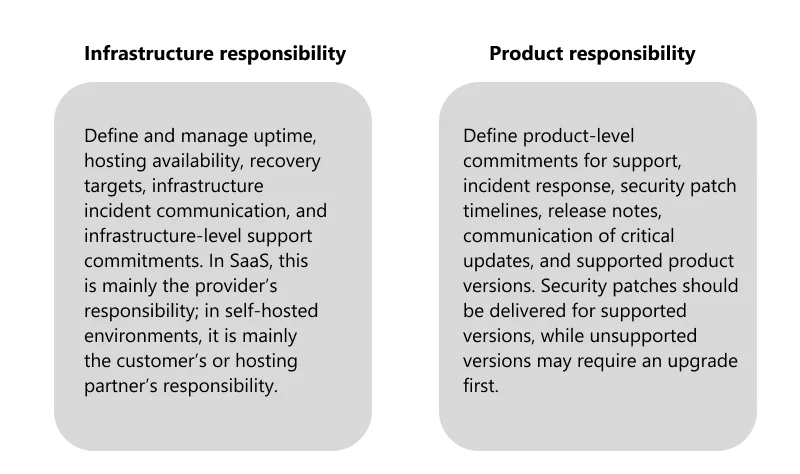
Service level agreements for security, support, and uptime
Why it matters:
Clarifies what level of support, response, patching, communication, and availability the customer can expect.
Example:
If a critical security issue is discovered, the SLA should clarify how quickly it is reviewed, how security patches are communicated, and who is responsible for downtime or recovery communication.
4. Managing compliance and third-party risk
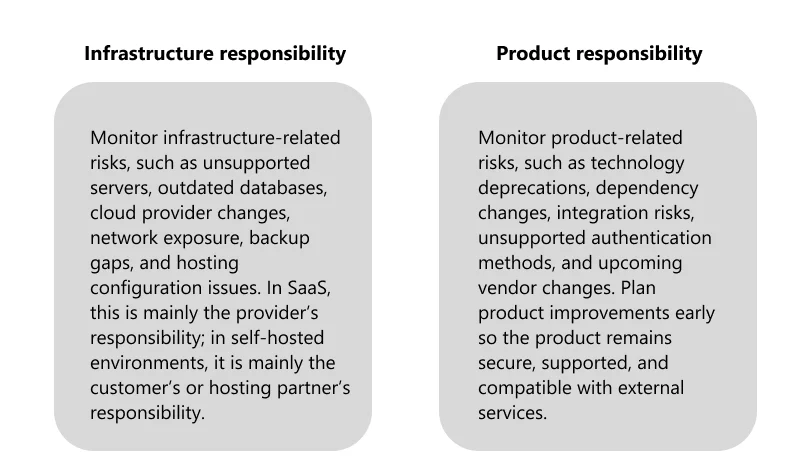
Risk assessment and management
Why it matters:
Helps the business identify security or compliance risks early and prepare before they become urgent problems.
Example:
If an email provider announces that an old authentication method will be discontinued, the organization should assess the impact and plan the change before the old method stops working.
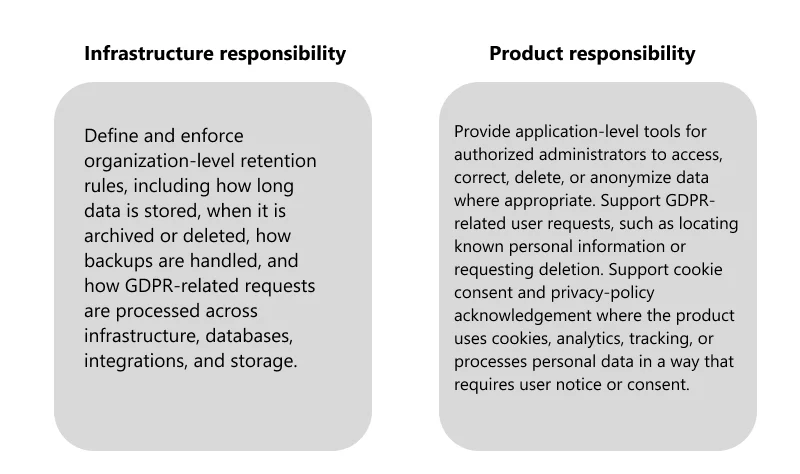
Data retention and deletion
Why it matters:
Ensures personal or business data is not kept longer than needed and can be corrected, deleted, or anonymized when required.
Example:
If a customer asks to delete personal data, the organization must know where the data is stored, whether it must be legally retained, and how it can be removed or anonymized. If cookies or tracking tools are used, users may also need to be informed and asked for consent.
Supply chain security
Why it matters:
Ensures that external vendors, platforms, services, and software components used by the organization do not introduce hidden security risks.
Example:
A system may rely on email services, identity providers, CMS platforms, open-source libraries, or ERP integrations. If one of these dependencies has weak security or suffers a breach, it can affect the business even when the product itself is protected.
Let’s sum up
Security compliance is not just about meeting regulatory requirements. It is about reducing risk, protecting trust, and making sure responsibilities are clearly understood across providers, product teams, and customer organizations. Leaders do not need to manage every control themselves, but they do need clear ownership, the right questions, and confidence that no critical area is being overlooked. In an increasingly digital business environment, those risks cannot be ignored, they must be clearly understood, owned, and addressed.
Do you happen to have any knowledge about Xpand?
Xpand is a product and service software development company with over 15 years of market experience and a Microsoft Partner since 2016, assisting organizations worldwide in managing their Microsoft Dynamics ERP systems. We provide a broad range of services for clients and partners, including implementation and development for Microsoft Dynamics 365 Business Central, as well as upgrade from earlier versions like Navision Financials 2.0. Learn more about our services at https://www.xpandsoftware.com/services.